Blind Willow Pollen Fly
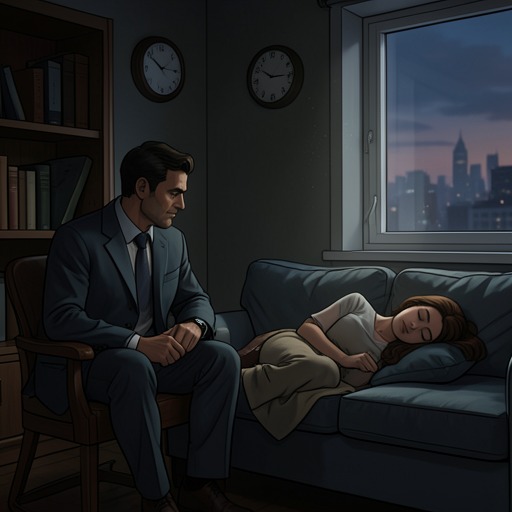
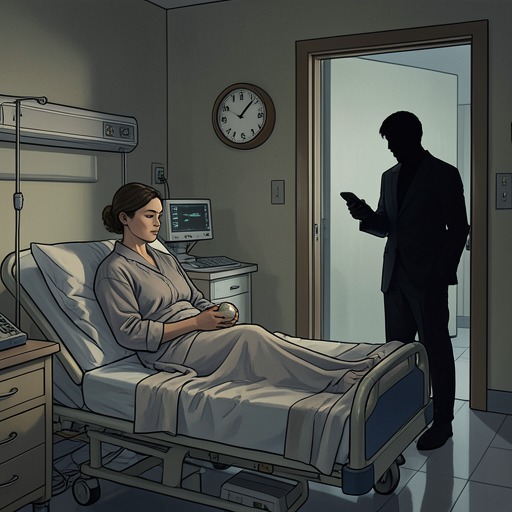
Blind Willow, Sleeping WomanThe blind-willow flies are tiny, pollen-covered insects in a story a girl invents and illustrates for her friends. They enter a sleeping woman’s ear, put her into a deathlike sleep, and eat her flesh from within. First presented as the unsettling machinery of a child’s dream, the flies return years later in the narrator’s imagination, linking an invented image of invisible invasion to the persistence of fear and memory.
Creation and Appearance
The flies originate in a dream the girl turns into a long poem during a summer when she is confined to bed for a week. It is the only homework assignment she completes that summer. She is still revising the poem when her friend asks to read it, so she declines and instead draws pictures and summarizes the plot. The tale’s surviving details reach the group through those drawings and her spoken explanation.
In one drawing, a house stands on a hill amid blind willows. A woman sleeps inside: the trees’ pollen has put her under. The girl explains that pollen-bearing flies crawl into the woman’s ear and induce the sleep. She makes a second drawing to show the tree itself: it is no larger than an azalea, with flowers framed by dark-green leaves that she compares to gathered lizard tails. Despite its name, it does not look like a willow.
The girl describes the blind willow as small above ground but possessed of extraordinarily deep roots. Once it reaches a certain point, it stops growing upward and drives its roots farther down, as if nourished by darkness. The explanation gives the insects’ origin a matching structure: what seems small or hidden on the surface is sustained by what lies below.
The Flies’ Work in the Tale
The insects carry the blind willow’s pollen to the sleeping woman’s ear, burrow inside, and put her to sleep. When her boyfriend asks what becomes of them, the girl answers that they remain inside her and eat her flesh. Her friend bluntly recasts the process as gobbling her up; the tale does not soften the implication that the woman’s sleep is also her destruction.
A young man later pushes through the dense stand of blind willows and climbs the hill, the first person to do so after the trees have taken over. With his hat pulled low and one hand brushing away swarms of flies, he presses on to see the sleeping woman and wake her. The friend points out the grim obstacle: by the time he reaches the top, the flies have nearly eaten her body. The girl answers that this is true in a sense, leaving the rescue suspended between an attempted awakening and a loss that may already be irreversible.
Retelling and Recurrence
The flies’ story is conveyed not through the poem itself, which the girl keeps revising, but through remembered conversation, a drawing, and a plot summary. Its successive tellings make the image more vivid: the friend asks what a blind willow is; the girl defines and pictures it; another friend asks about the flies; and the girl supplies their disturbing fate. The invented ecology takes shape through ordinary questions, each answer making the imagined danger more intimate.
Years later, the narrator tries to examine his cousin’s ear closely. Its folds and hollow opening remind him of a dark cave, and he pictures his friend’s girlfriend—the girl who created the story—with microscopic flies nesting in her ear. He imagines pollen clinging to their legs as they burrow into the warmth, suck up her juices, and lay eggs in her brain. He stresses that they cannot be seen or heard, then the cousin stops the examination. The childhood invention has returned as an involuntary image attached to an ordinary act of looking.
Narrative Significance
The blind-willow flies turn the story’s central fear into a process that cannot be witnessed directly: the insects are microscopic, hidden inside the ear, and silent, while their effects are sleep and the gradual consumption of the body. The scene makes an unseen danger imaginable without making it visible. Their roots, pollen, and movement inward also bind the tale’s separate images into a system: darkness nourishes the tree, the tree’s pollen travels by flies, and the flies carry that hidden world into a human body.
The narrator’s later mental picture preserves the unsettling logic of the childhood tale, but its return also shows how an image can outlast the occasion that produced it. The flies first belong to a poem the girl does not yet share; later they surface in another person’s memory at the sight of an ear. Their recurrence lets an invented story become part of the narrator’s private imaginative vocabulary, where the boundary between remembered fiction and immediate perception grows momentarily thin.